


The short answer
Most built-in freezer problems, such as warm temperatures, frost build-up, ice maker failures and error codes, come from a fixable part like a fan, defrost component, sensor, gasket or control board. Our technician diagnoses the specific fault on your Sub-Zero, Viking or Thermador unit and gives you a clear repair-or-replace recommendation before any work begins.
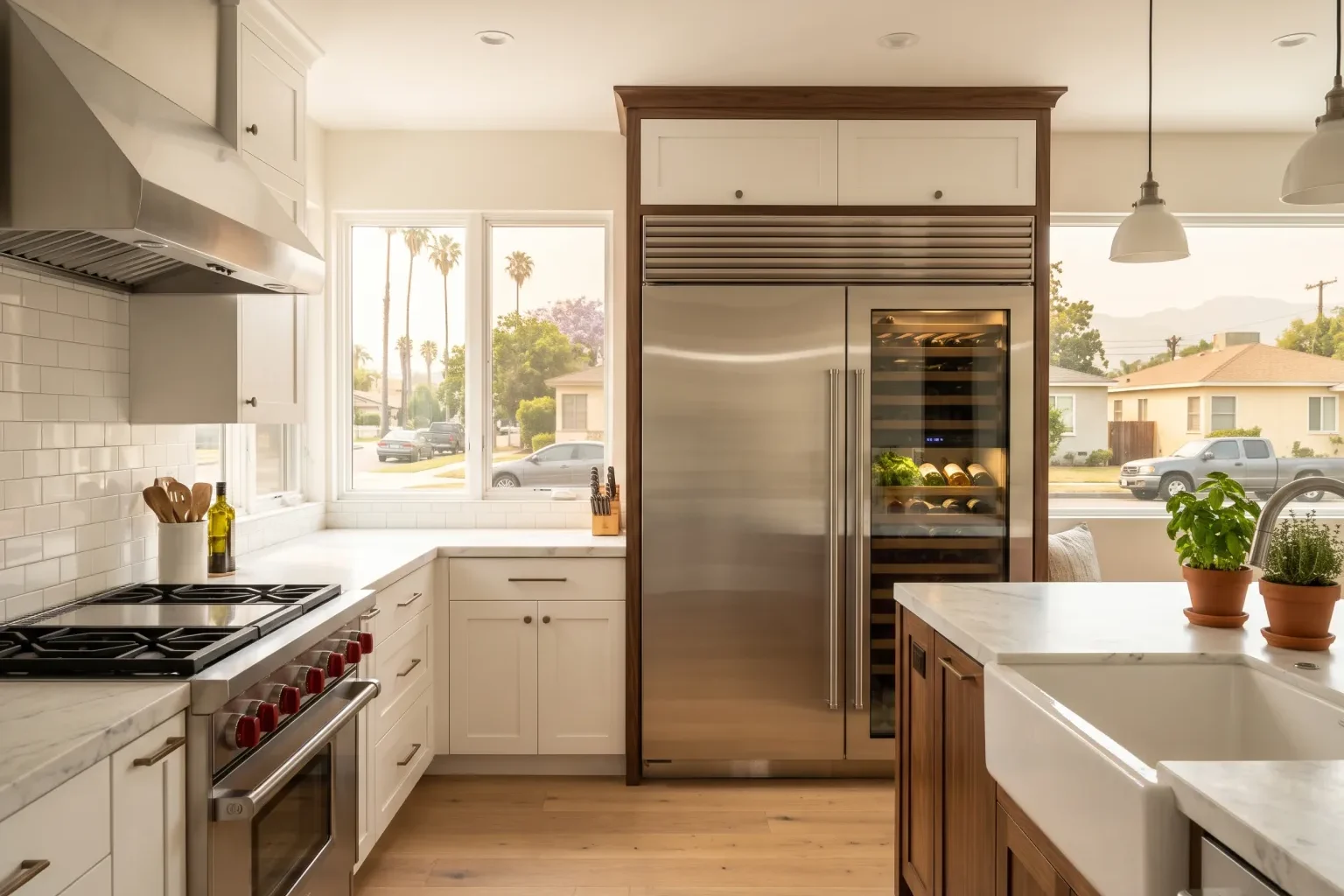
When a built-in freezer starts running warm, frosting over, or flashing an alarm, the food inside is on a clock. Sub-Zero Service Center repairs high-end freezers for homeowners in Wilmington and nearby cities like Carson, Harbor City, San Pedro and Long Beach. We focus on Sub-Zero, and we also service Viking, Wolf and Thermador appliances. Many of the kitchens we visit pair a Sub-Zero or Thermador freezer column with a Wolf or Viking range. We are an independent repair company with no ties to any manufacturer. Our job is to find the actual fault, explain it in plain terms, and fix it so the unit holds temperature again.
Issues we fix
Freezer trouble usually shows up in one of a few ways. If you notice any of these, it is worth a call before a small problem becomes spoiled food or a failed compressor:
- Not cold enough: ice cream softening, meat thawing at the edges, or the display reading higher than the set point
- Frost or ice build-up on the back wall, around the door, or covering the evaporator panel
- Ice maker not producing ice, making small or hollow cubes, or leaking water into the bin
- Water or ice pooling under the drawers or on the floor, often a sign of a blocked defrost drain
- Error codes, flashing lights, or a temperature alarm that keeps sounding
- Running constantly, cycling on and off rapidly, or making new clicking, buzzing or grinding noises
- Doors or drawers that don't seal, close unevenly, or leave a visible gap
What our technician checks on a built-in unit
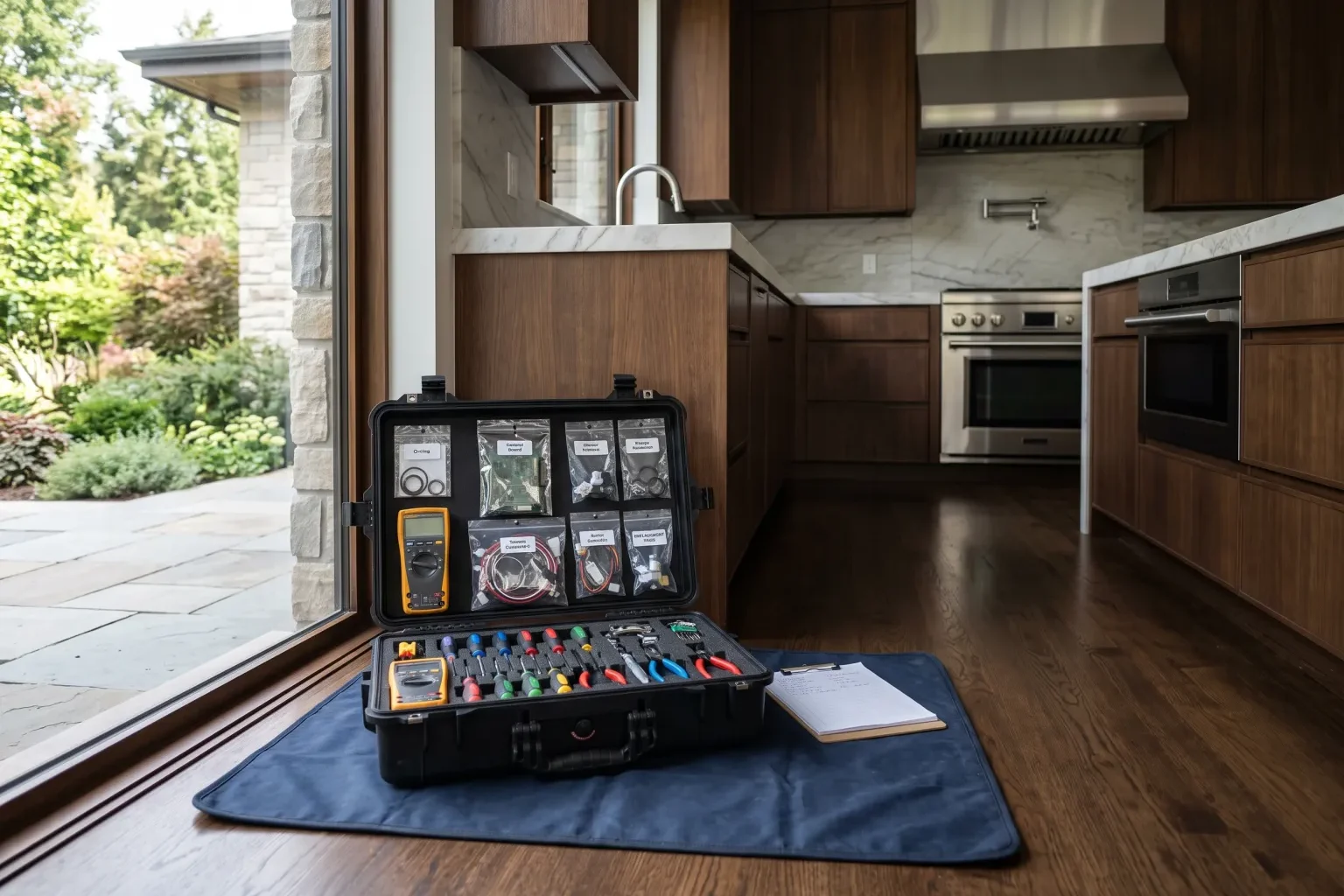
Built-in and integrated freezers are packed tightly into cabinetry, so airflow and access matter as much as the parts themselves. We start by confirming the complaint: reading the actual temperatures, checking any stored error codes, and listening to how the unit runs.
From there we work through the system in order. We inspect and clean the condenser coil, which on many built-in models sits behind a top or bottom grille and collects dust and lint over time. We test the condenser and evaporator fans, the defrost heater, the defrost sensor or thermostat, and the temperature sensors that tell the control board what is happening inside. We check the defrost drain and pan for clogs, look at door gaskets and hinge alignment, and confirm the unit is level and has the ventilation clearance it needs.
If an ice maker is involved, we check the water inlet valve, the supply line for kinks or freezing, and the filter. When the evidence points to the sealed system, meaning the compressor or a refrigerant leak, we tell you directly, because that changes the repair conversation.
How Sub-Zero, Viking, Wolf and Thermador freezers differ
Sub-Zero built-in freezers and freezer columns are designed for long service lives, and many Sub-Zero models use dedicated refrigeration systems for different compartments. The issues we see most often are dirty condenser coils that make the unit work harder, failing fans, defrost components, ice maker problems and worn gaskets. Because the condenser is often at the top of the unit, it is easy to forget about it until temperatures start to drift.
Viking built-in freezers and columns tend to come to us with ice maker faults, defrost problems that lead to frost on the back panel, door seal issues, and electronic control or sensor failures that show up as alarms or inaccurate readings.
Thermador freezer columns rely heavily on electronic controls, so error displays, sensor faults and fan issues are common calls, along with ice maker and water valve problems.
Wolf is known for cooking appliances rather than freezers, but many homes we visit have a Wolf range or wall oven next to their refrigeration. If something there needs attention too, we can look at it during the same visit.
Tell us what your appliance is doing.
Repair or replace a high-end freezer?
With a premium built-in freezer, repair is usually the sensible choice. These units cost far more than a standard freezer, they are sized to fit custom cabinetry, and most failures involve replaceable parts like fans, sensors, defrost components, valves and boards. Replacing the whole unit often means matching panels and openings, which adds work and disruption.
Replacement starts to make sense when the sealed system has failed on an older unit, when parts are no longer available, or when the cabinet itself has rust, cracked liners or other damage. We lay out what is wrong, what the repair involves, and whether we think it is worth doing, then you decide.
What affects the cost of a freezer repair
We don't quote a number until we know what is actually wrong. The main factors are the fault itself, the parts needed, and how hard the unit is to reach. A clogged drain or dirty condenser is a very different job from a sealed system repair. Parts prices vary by brand and model, and some electronic components cost more than mechanical ones.
Access matters too. A freezer column built flush into custom cabinetry with matching panels may need to be carefully pulled out or partly disassembled to reach the parts. We explain all of this before starting any repair.
How a freezer repair visit works
When you contact us, we'll ask for the brand, the model if you have it, and what you are seeing. Photos of an error code or the frost pattern help. A technician arrives in the window we set, diagnoses the unit, and walks you through the findings and options.
If you approve the repair and the part is on hand, we can often finish the same day. If a part has to be ordered, we'll tell you how to protect your food in the meantime and schedule the return visit. Before leaving, we confirm the freezer is cooling and cycling normally.
One local note: in hotter inland areas, and during fall Santa Ana spells, a freezer with a dirty condenser or weak fan will struggle more. Keeping the grille clear helps year-round.