


The short answer
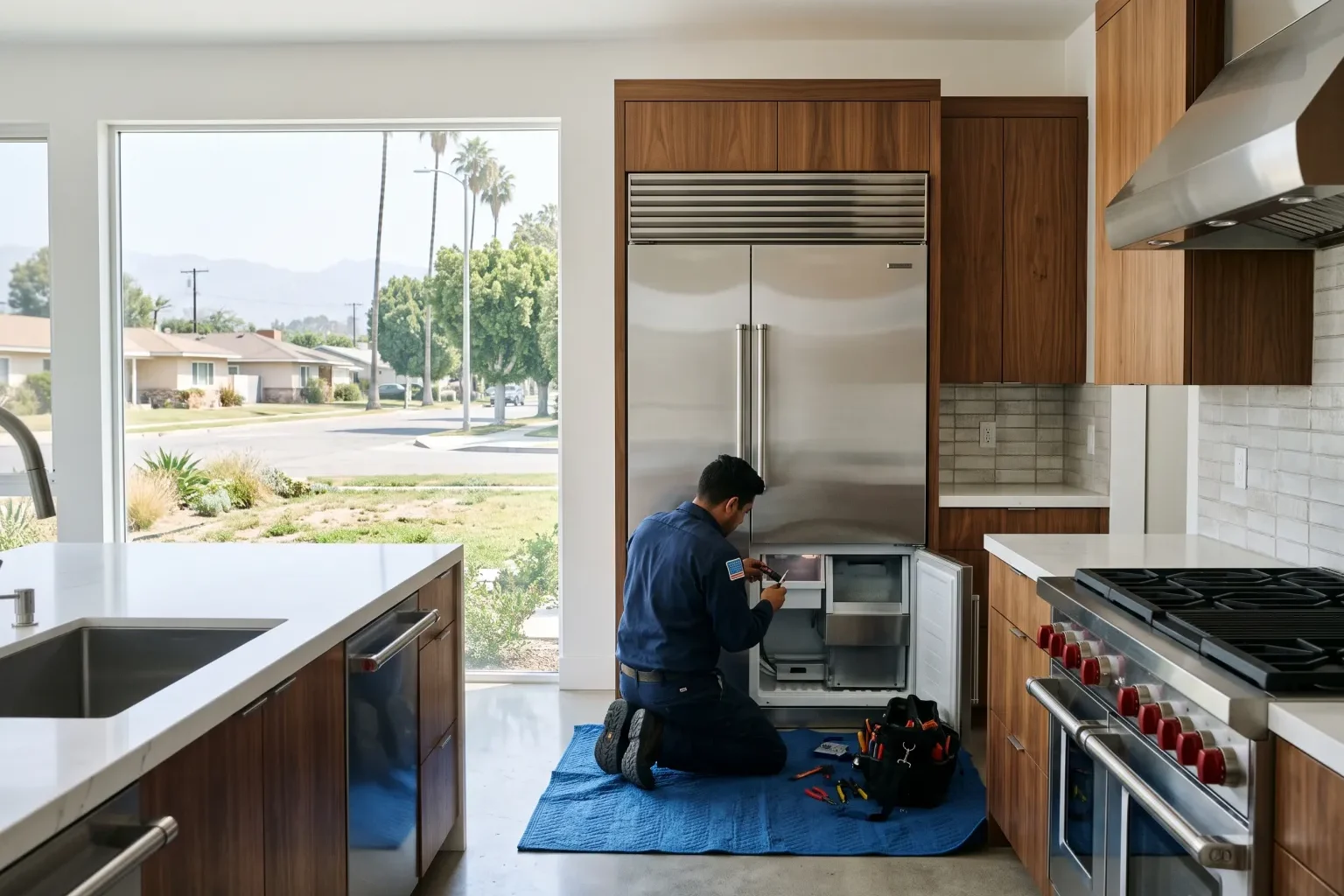
Most ice maker problems on high-end built-ins come from the water supply, a frozen fill line, a worn valve or motor, or a faulty sensor, and nearly all of them can be repaired without replacing the refrigerator. We diagnose the specific fault on site in Wilmington and nearby cities, then explain the repair before any work begins.
When the ice bin in a built-in refrigerator or undercounter ice machine stops filling, the cause is often small: a frozen fill tube, a clogged water filter, a failing inlet valve, or a sensor that reads wrong. On a premium unit, it is worth finding the actual fault rather than swapping parts until something works. Sub-Zero Service Center repairs ice makers in Wilmington and nearby cities, with a focus on Sub-Zero built-ins, along with Viking and Thermador refrigeration. We also work in kitchens built around Wolf cooking equipment, which are often paired with these refrigerators. We are an independent repair company and are not affiliated with any of these brands.
Issues we fix
Ice maker trouble usually shows up in one of a few ways. Some problems point to the water supply, some to the freezer section, and some to the ice maker assembly itself. Tell us what you've noticed when you book. It helps us bring the right parts on the first visit.
- No ice at all, or the bin fills much more slowly than it used to
- Small, hollow, or misshapen cubes, which often means low water flow
- Ice clumped or fused together in the bin
- Water leaking under the unit or pooling in the freezer
- Frost build-up around the ice maker or fill tube
- Ice maker not cooling properly, or a freezer section running warm
- Clicking, buzzing, or grinding when the ice maker tries to cycle
- Error codes or a flashing indicator on the control panel
- Undercounter ice machines that are not draining or that overflow
- Ice with an off taste or odor, even after a filter change
What our technician checks on a built-in unit
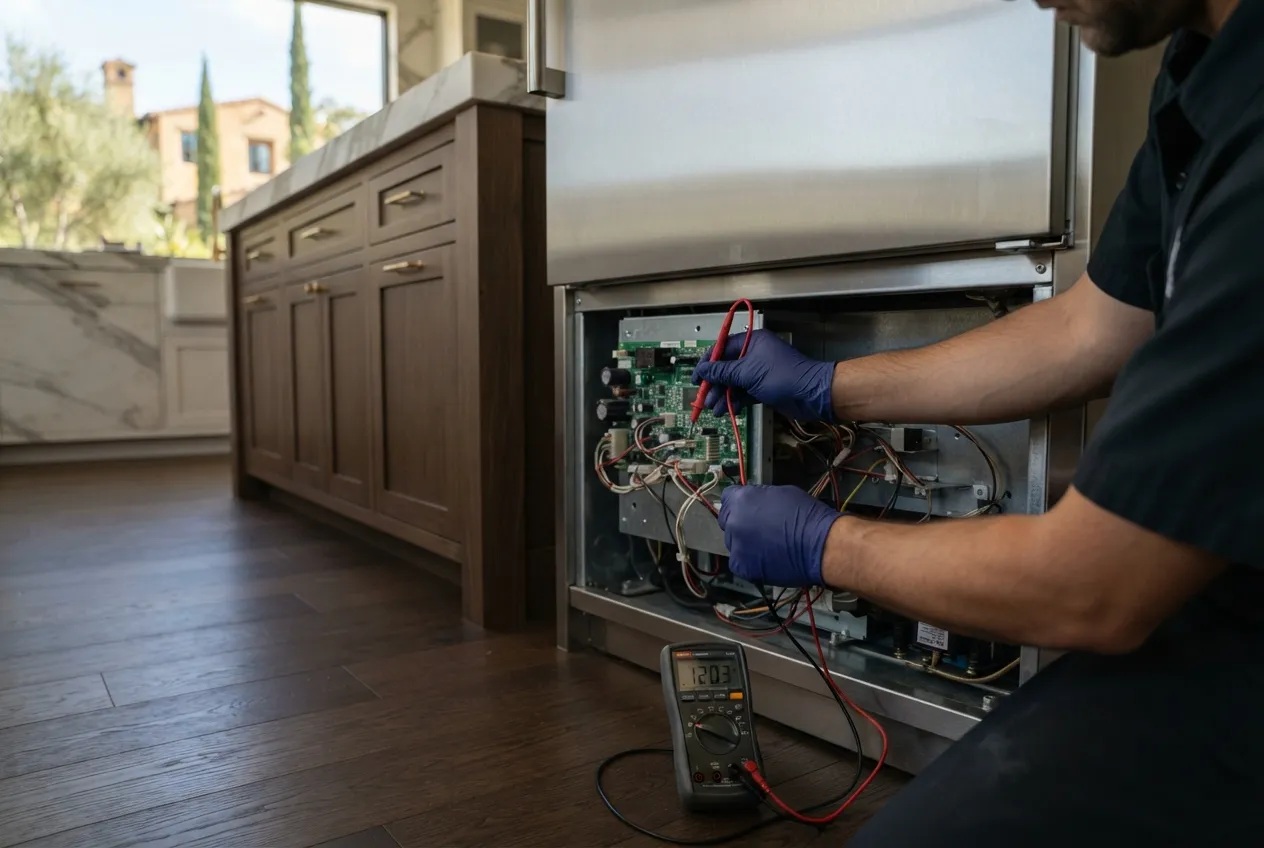
Built-in and professional-style refrigerators fit tightly into cabinetry, so the diagnosis starts with the parts we can reach without moving the unit. We check the water supply first: the shutoff valve, the supply line, the water filter, and the household water pressure reaching the refrigerator. A partly closed valve or an overdue filter causes more slow-ice complaints than any failed part.
Next we test the water inlet valve and look for a frozen or kinked fill tube, a common cause of no ice. We check the ice maker module itself: the ejector motor, the heater that releases cubes, the bail arm or optical sensor that tells the unit when the bin is full, and the thermostat or thermistor that starts each harvest cycle. We measure freezer temperature, since an ice maker can't keep up if the freezer is running warm. That leads us to the evaporator fan, the defrost system, and the condenser airflow.
On undercounter ice machines we also check the drain line or drain pump, the water distribution and evaporator plate, and mineral scale. Scale builds up over time and slows ice production.
How Sub-Zero, Viking, Wolf and Thermador ice makers differ
Sub-Zero makes built-in refrigerators and freezers with ice makers, and also offers dedicated undercounter ice machines. On the built-ins, the problems we see most often are water supply issues, frozen fill tubes, and inlet valves. The undercounter models produce clearer ice through a different process, so drain pumps, scale, and water distribution matter more on those units.
Viking refrigerators and Viking undercounter ice machines run into many of the same supply-side faults. Ice maker modules and the sensors that control harvest cycles also wear out with heavy use. This shows up most in homes that go through a lot of ice in summer, especially when hot, dry spells push ice demand up.
Wolf is a cooking brand, so Wolf ranges, ovens, and cooktops don't have ice makers. Many of the kitchens we visit pair Wolf cooking equipment with a Sub-Zero refrigerator, and we're glad to look at the whole kitchen while we're there.
Thermador column refrigerators and freezers have ice makers built into a tall, narrow freezer column. Fill tube freeze-ups, inlet valves, and control or sensor faults are the usual suspects. The column design can also make access inside the cabinetry more involved.
Tell us what your appliance is doing.
Repair or replace a high-end unit?
On a premium built-in, repair is usually the sensible choice. The refrigerator is sized to your cabinetry, and a replacement can mean new panels, trim work, or a model that doesn't quite fit the opening. An ice maker fault on its own rarely justifies replacing an otherwise healthy refrigerator.
Replacement starts to make sense when the sealed cooling system has failed and the cabinet is aging, when needed parts are no longer available, or when several major components are failing at once. We'll tell you plainly what we find. If a repair doesn't make sense, we'll say so and explain why.
What affects the cost of an ice maker repair
We don't quote a price until we've diagnosed the unit, because the same symptom can have very different causes. These are the main factors:
- The actual fault: clearing a frozen fill tube or replacing a filter is simpler than replacing an ice maker module or chasing a control problem
- The parts required, and whether they are readily available for your model
- Access: units set deep into custom cabinetry, with integrated panels or tight surrounds, can take longer to reach safely
- Related issues, such as a warm freezer or failing defrost system that also needs attention
- Undercounter ice machines that need descaling or drain work in addition to a part replacement
How a visit works
When you contact us, tell us the brand, the model number if you can find it, and what the ice maker is doing. The model tag is usually inside the refrigerator or freezer compartment. We'll schedule a visit to your home in Wilmington or a nearby city.
At the appointment, the technician confirms the symptoms, checks the water supply and the unit, and explains what failed. You get a clear explanation of the repair before any work begins. If we have the part on hand, we can often finish the same visit. If a part has to be ordered, we schedule a return trip once it arrives. Before we leave, we make sure water is flowing and the ice maker is cycling. We'll also tell you how long to wait before the bin starts filling normally.