


The short answer
Most wine cooler problems, such as warm zones, frost, leaks and error codes, come from a fixable part like a fan, sensor, control board, door gasket or blocked drain, not a failed cooling system. On a high-end built-in unit, repair is usually the better choice unless the sealed system has failed and the cabinet is also showing its age.
A wine cooler that runs a few degrees warm, cycles nonstop, or goes quiet can put a collection at risk before you notice anything is wrong. Sub-Zero Service Center repairs built-in and professional-style wine storage in Wilmington and nearby communities, including San Pedro, Harbor City, Carson, Lomita and Long Beach. Sub-Zero wine storage is most of our wine work. We also repair Viking and Thermador wine units, and we service Wolf cooking equipment in many of the same kitchens. We are an independent repair company, not affiliated with or endorsed by any of these brands. Below is what usually goes wrong, what we check, and how a repair visit works.
Issues we fix
Wine storage is less forgiving than a regular refrigerator. Wine keeps best at a steady temperature, so a unit that swings up and down or slowly drifts needs attention even if the bottles still feel cool. These are the problems homeowners call us about most:
- Not cooling, or one zone of a dual-zone unit running warm
- Temperatures that swing and never settle at the set point
- Frost or ice on the back wall of the cabinet
- Water pooling inside the cabinet or on the floor in front of the unit (a drain or drain-line problem)
- Fogging or condensation on the glass door
- Error codes, a blank display or a touch panel that doesn't respond
- Compressor or fans running constantly, or clicking on and off every few minutes
- Buzzing, rattling or grinding noises
- Interior lights out or a dim display
- A door that won't seal, sags or doesn't close on its own
What our technician checks on a built-in unit
Built-in and column-style wine units are installed flush with cabinetry, so the first question is how the unit breathes. We check the front grille or toe-kick vent for blockage and look at whether cabinet trim or a panel has been fitted in a way that restricts airflow. Then we clean and inspect the condenser coil and confirm the condenser fan is running. A dusty coil or a slow fan is one of the most common reasons a unit runs warm and never shuts off. In homes near the harbor, salt air can also corrode coils and fan parts over time.
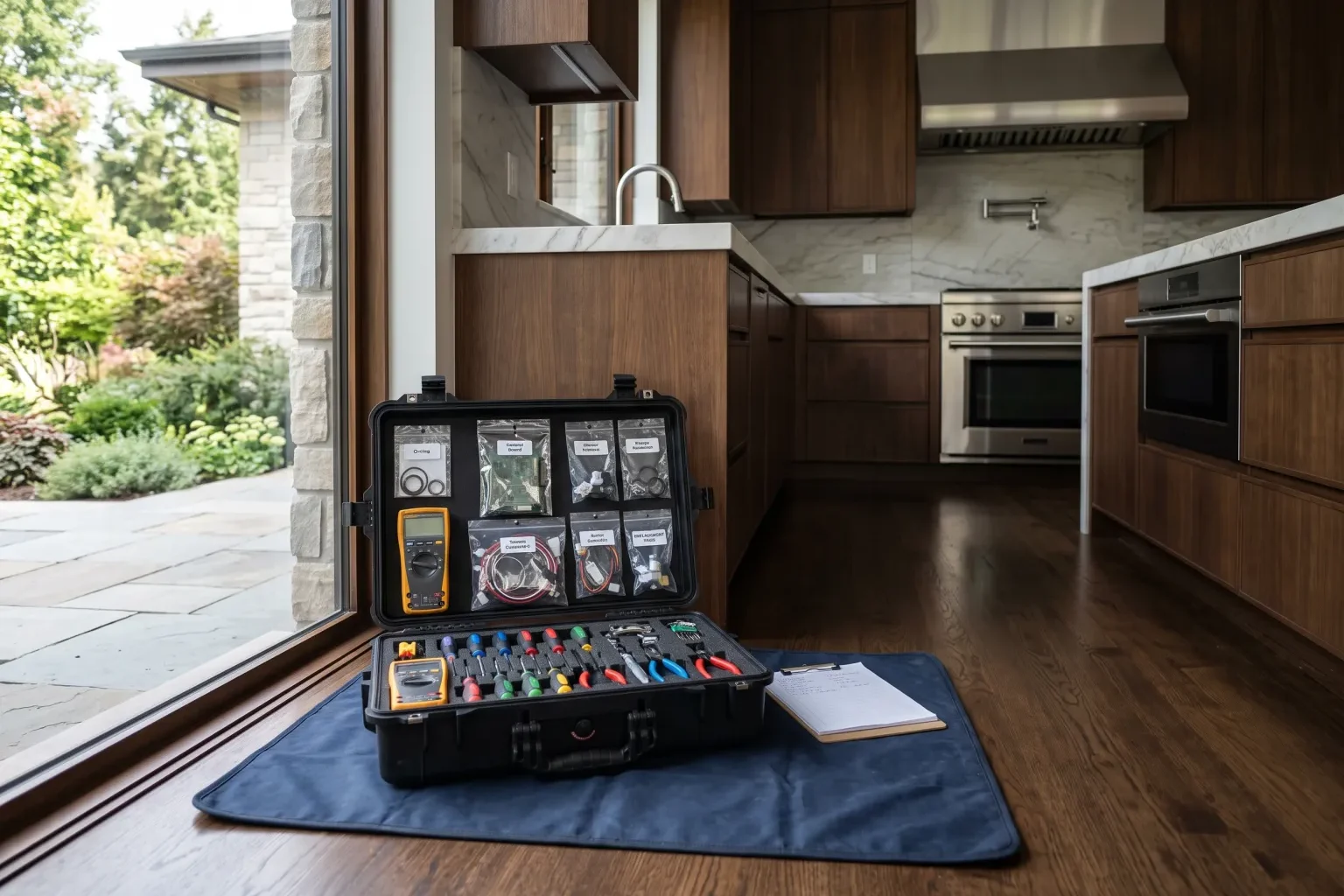
Inside, we measure actual temperatures in each zone against the display and test the thermistors (temperature sensors) that feed the control board. We check the evaporator fan, look for frost patterns that point to a defrost heater, defrost sensor or airflow problem, and clear and test the drain path. We inspect the door gasket all the way around, check the hinges and door closer, and read any stored error codes. If those checks don't explain the fault, we test the compressor's starting components and look for signs of a refrigerant leak before calling it a sealed-system problem.
How Sub-Zero, Viking, Wolf and Thermador units differ
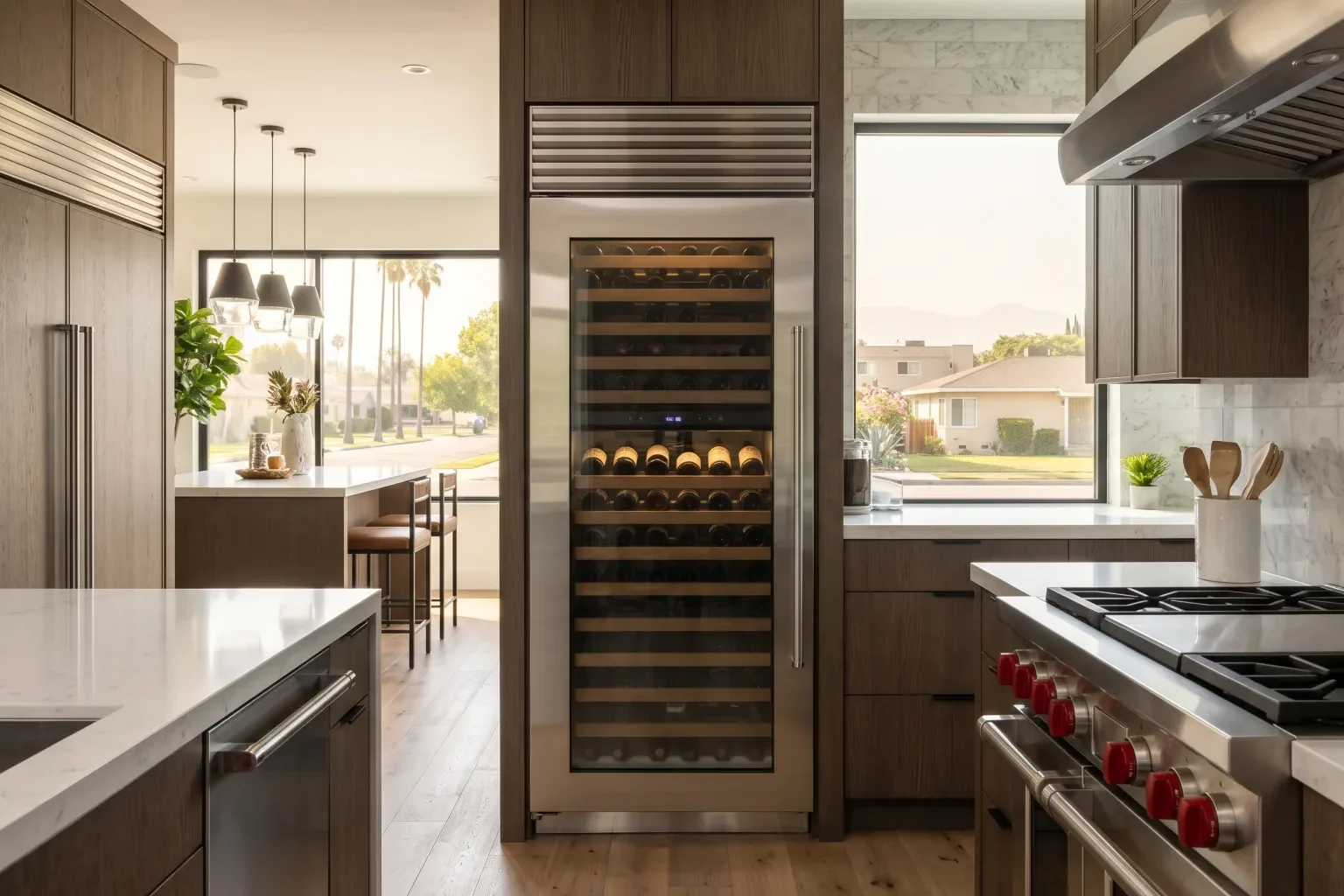
Sub-Zero wine storage comes as undercounter units and tall columns, many with two or three independently controlled zones. Because each zone has its own sensor and airflow path, a single warm zone often traces back to one sensor, a damper or a fan, not the whole unit. Electronic controls and display boards also show up in our repairs, along with condenser cleaning on units that have gone a long time between service visits.
Viking undercounter wine units vent through the front, so the toe-kick area tends to collect dust, pet hair and debris. Condenser fan problems and worn door gaskets are common findings, and on older units we check door hinges and glass door seals carefully. Thermador wine columns are tall, panel-ready units built into the cabinetry. Their heavy integrated doors put real load on hinges and closers, and the electronic controls and sensors are a frequent part of the diagnosis.
Wolf is the cooking side of the Sub-Zero family and doesn't make wine storage. Many of our customers have a Sub-Zero wine column next to Wolf ranges or wall ovens, and we can look at both on the same visit if you need it.
Tell us what your appliance is doing.
Repair or replace a high-end wine cooler?
For built-in units from these brands, repair is usually the practical choice. Fans, sensors, control boards, gaskets, hinges and drain parts can be replaced without disturbing the cabinetry. A replacement, by contrast, often has to match the exact cutout dimensions and custom panels of your kitchen, which can add cabinet work to the job.
Replacement deserves a serious look when the sealed system has failed (the compressor, or a refrigerant leak in a hard-to-reach line), when the cabinet liner or door is damaged, or when an older unit needs several major parts at once. We explain what failed, what the repair involves, and whether parts for your model are still available, so you can decide with the full picture.
What affects the cost of a repair
We don't quote a repair until we've diagnosed it, because the price depends on what's actually wrong. A few things drive it:
- The fault itself: cleaning a condenser or clearing a drain is a smaller job than replacing a control board or repairing the sealed system
- Parts: some components for premium wine units are model-specific, and availability varies by age and model
- Access: units tightly fitted into custom cabinetry or with heavy integrated panels can take more time to pull out and reinstall safely
- Whether more than one problem is involved, such as a failed fan that also caused frost build-up
How a service visit works
When you contact us, tell us the brand, the model number if you can find it (usually on a label inside the cabinet), and what you're seeing. That helps the technician come prepared. On site, we diagnose the unit, explain the cause in plain terms, and give you the repair cost before any work starts. If we have the part, we can often finish the repair on the same visit. If a part has to be ordered, we tell you what to expect and how to protect your wine in the meantime.
Until we arrive, keep the door closed, avoid adding new bottles, and if the unit is clearly warming up, move your most valuable bottles somewhere cool and dark. Don't chip at frost or ice, which can puncture the liner or the cooling lines behind it.